Tour NY

UPrinting.com

GoDaddy

Showing posts with label Hispanic Marketing. Show all posts

Small Business Strategies: Hispanic market is an opportunity

By Rhonda Abrams, USA TODAY

We're in the middle of National Hispanic Heritage Month, Sept. 15 to Oct. 15, and I've got a confession to make: Although my books have been translated into more than 30 languages worldwide, I've never had them translated into Spanish for the American Hispanic market.

That may make some readers of my column glad.

"Let 'em learn English," I can imagine you shouting.

The truth is, as a businessperson, I owe it to myself to take a realistic look at the opportunities in the large, vibrant American Hispanic market.

No matter how you feel about the hot-button issue of immigration, as a small-business owner you should not ignore the fact that Hispanics in the United States represent a huge marketing opportunity.

Like me, you need to consider reaching that market. And, like me, you don't necessarily need to learn Spanish or translate your marketing materials into Spanish.

About 83% of young Hispanics and 56% of Hispanics older than 18 speak only English or English very well at home, according to Pew Hispanic Center tabulations of Census Bureau statistics. That means you can reach large numbers of Hispanics in English — if you try.

Serving Hispanics can be a great business move.

A businessman I know had a struggling used-car dealership. Then, 25 years ago he targeted Hispanics in his community, including migrant farm workers, when no one else would. He learned Spanish, hired Spanish-speaking salespeople, and extended credit to customers when others wouldn't.

He became a millionaire.

This car dealer learned what many entrepreneurs have realized: Hispanics in this country have a lot of money to spend. The average median Hispanic household income in 2009 was $38,039. While that is less than the $51,861 for white households, it still means Hispanic consumers have money to buy your products or services. (While white is a race for U.S. Census purposes, Hispanic is an ethnicity and Hispanics can be of any race.)

More than 50 million people across the country are Hispanic, according to 2010 Census data. That's more than 16% of all Americans.

It's dumb to write off 1 in 6 people without even thinking about it. And that number is growing and will keep growing regardless of the immigration policies we adopt. By 2050, it is projected that Hispanics will be 30% of America's population.

Generally, Hispanic consumers are young: Hispanics' median age is 27, compared to a median age of 41 for non-Hispanic whites. These younger Hispanic consumers have families and homes, thus they need groceries, clothing and hardware. They also consume a lot of entertainment and gadgets.

If your company's customers are businesses, rather than people, Hispanic-owned businesses represent a huge business opportunity. In 2007, the United States had about 2.3 million Hispanic-owned businesses. And they generated a lot of money, $345.2 billion in gross revenues.

Those figures have almost certainly declined since the onset of the Great Recession in 2008. But Hispanic-owned businesses still have a lot of money to spend on business services, supplies, and equipment. They have to buy from someone.

Hispanics are a large market, but realistically, it's a challenge for a small company to figure out how to serve that market. The best way to get a piece of the Hispanic market is to go about it the same way you approach any other target market: Sit down and devise a marketing plan.

1. Assess your products and services. Is there any reason they are not appropriate for the Hispanic market?

2. Assess your competition. Who is selling your products or services to the Hispanic market now? Can you position yourself better?

3. Look for networking groups. You can join your local Hispanic Chamber of Commerce even if you're not Hispanic.

4. Advertise in local media reaching the Hispanic market. If you don't speak Spanish, advertise in English. Many English-speaking Hispanics read Spanish language publications.

5. Try translating some of your marketing materials or a website page into Spanish. You can hire translating services, hire Spanish-speaking employees or consultants, even hire a Spanish speaking student from a local college.

If you want to be stubbornly anti-immigrant, you can write off this critical market.

And, of course, you can build a successful business without Hispanics. But if you're a smart entrepreneur, you'll at least consider the American Hispanic market as you develop your growth strategy.

Now, can someone find me a good translator for my books?

Copyright Rhonda Abrams 2011.

Hispanic Household Wealth Fell by 66% from 2005 to 2009

Washington, DC [CapitalWirePR] July 26, 2011 – Median household wealth among Hispanics fell from $18,359 in 2005 to $6,325 in 2009. The percentage drop---- 66%---- was the largest for any racial or ethnic group, according to a new report by the Pew Research Center's Social & Demographic Trends project. During the same period median household wealth declined 53% among black households and 16% among white households.

The Pew Research report provides the first look at how the Great Recession impacted household wealth. It finds that plummeting house values were the principal cause of the erosion in wealth among all groups. However because Hispanics derived nearly two-thirds of their net worth in 2005 from home equity and a disproportionate share reside in states that were in the vanguard of the housing meltdown, Hispanics were hit hardest by the housing market downturn.

The report also finds that the median wealth of white households is 18 times that of Hispanic households and 20 times that of black households. These lopsided wealth ratios are the largest in the quarter century since the government first published such data, and roughly twice the size of the ratios that had prevailed between these three groups for the two decades prior to the Great Recession.

These findings are based on a Pew Research Center analysis of newly-available data from the Survey of Income and Program Participation (SIPP), an economic questionnaire distributed periodically to tens of thousands of households by the U.S. Census Bureau. It is considered the most comprehensive source of data about household wealth in the United States by race and ethnicity.

The report, "Twenty to One: Wealth Gaps Rise to Record Highs Between Whites, Blacks and Hispanics," can be accessed on the Pew Hispanic Center website and on the Pew Social & Demographic Trends website.

The Pew Hispanic Center and Pew Social & Demographic Trends are projects of the Pew Research Center, a nonpartisan, non-advocacy research organization based in Washington, D.C., and funded by The Pew Charitable Trusts.

General-Market Shops Snatching Up Hispanic Business

Posted by Laurel Wentz on 04.26.10

NEW YORK (AdAge.com) -- After years of trying to convince the mainstream world of the size and importance of the Hispanic market, Hispanic agencies are finding that one group has started to listen: general-market shops. Pressured by cost-cutting clients, general-market agencies are taking on Hispanic shops for a bigger share of the fast-growing Latino market.

MULTICULTURAL: DraftFCB combines its Hispanic team with its general-market team. With 2010 Census data likely to show big growth in the Hispanic population, the fight is likely to intensify as general-market agencies poach talent and specialty shops protect their turf.

The ad industry was stunned earlier this month when Home Depot moved its $37 million Hispanic account from incumbent Vidal Partnership to Richards/Lerma, a little-known Hispanic capability at Home Depot's general-market agency, Richards Group.

Separately, Unilever is doing a pitch to consolidate its Hispanic business that doesn't rule out participation by general-market agencies. "The business should go to whoever pitches it best," said Tatiana Hansell, senior brand manager-multicultural at Unilever.

Since then, Wendy's has started a review of its Hispanic business that requires contenders to forward their information to Wendy's general-market agency, Kaplan Thaler Group, according to a critical statement issued by the Association of Hispanic Advertising Agencies about both reviews.

In a reference to the Wendy's review, Joe Zubi, chief operating officer of Zubi Advertising, wrote in the agency's ZubiNation blog: "One RFP was actually sent to us by the person who heads up the account at the general-market agency. The first question was to describe how well we get along with general-market agencies. If that does not send a clear message that the Hispanic shop will follow the footsteps of Big Brother, I don't know what does. Not to mention that Big Brother can then figure out how best to approach the market and tell the client that they can do it just as well for less money ... does the name Home Depot ring a bell?"

Pitch to 'band together'
Javier Palomarez, president-CEO of the Hispanic Chamber of Commerce, said he dispatched a letter April 14 to the CEO of Home Depot "voicing our disappointment and surprise," and sent copies to the Hispanic Chamber's 210 chapters across the country.

"As a community we have not done a good enough job of banding together," said Mr. Palomarez, who in the past headed multicultural marketing for Bank of America and early in his career developed Allstate's first Hispanic advertising. He said the chamber represents about 3 million companies generating more than $4 billion in revenue, with about 21% coming from businesses that work in fields such as construction, renovation and landscaping and are "great customers of Home Depot."

Although Home Depot represents the biggest Hispanic account to go to the least-known agency, other general-market agencies are gaining traction.

Havas Worldwide is hiring a top Hispanic creative director, Vidal Partnership's Mauricio Galvan, and Leo Olper, chief operating officer of Hispanic shop Lapiz, to build a Hispanic agency to serve Euro RSCG Worldwide and Arnold clients, replacing the moribund Euro RSCG Latino.

DraftFCB has assembled about 55 multicultural specialists at the agency's 1,100-person Chicago office, said Simon El Hage, senior VP-multicultural segments. Integrated in the general-market account teams, they work on multicultural business for the agency's general-market clients such as State Farm, Kmart and Taco Bell, whose Latino account it just stole from Hispanic shop Dieste. DraftFCB has even joined the Association of Hispanic Advertising Agencies as an associate member.

"Multicultural audiences are the pop-culture creators," said Ken Muench, who joined DraftFCB in December 2009 as senior VP-director of multicultural planning from leading Hispanic agency Grupo Gallegos. "You can't be a credible general-market agency without considering the multicultural segment."

One of the biggest changes shaping the market is the trend toward what many are calling the total market -- a melding of the general market and the growing multicultural market, partly due to the increasing numbers and influence of Hispanic and black consumers.

"Mainstream culture today is not the general market," Mr. Muench said. "It's a multicultural-inspired total market."

The End of the 'Average American'

"Fifty years ago, the concept of John Doe, an average American in a relatively even society where vast numbers of people had similar consumer needs, was real," writes Karen Talavera at MarketingProfs. But results from the 2010 census—due to be released this summer—will show just how much that picture has changed. For marketers, the message is simple: There's no such thing as an "average American" anymore.

No racial or ethnic segment is a majority in our two most populous states—California and Texas—or in our ten largest cities.

Households headed by married couples are now a minority, down from a two-thirds majority 25 years ago.

Life expectancy is up, and elders often live with children and grandchildren.

"One-size-fits-all messaging isn't going to cut it," argues Talavera. "It will seem wildly off-base and irrelevant, especially if you attempt it in your email and social media marketing—avenues in which instantaneous feedback and listening is expected."

She has advice like this for your online, mobile and social media strategies:

Segment, segment, segment. The more you know about individual customers, the more relevant your messaging can be. Age, gender, location, household composition, marital/family status and ethnicity all matter. But don't forget about life stages like new parents, families with children and empty nesters.

Trust, but verify. As the population diversifies, customers might find themselves in multiple segments, making hard-to-predict decisions. Solicit their preferences with frequent surveys, but compare their responses to demonstrated behavior.

The Point: "Until you dig deep into your customer data—demographics, offer responses, media preferences, survey answers, and more—you may have assumptions about your customers that are entirely untrue," concludes Talavera.

Source:
Do You Really Know Your Customers? Marketing to a Rapidly Diversifying Population
by Karen Talavera

Lakers, NBA are reaching out to fast-growing Latino market

The Lakers just scored a slam dunk in the Latino market.On Monday the team announced a 20-year agreement with Time Warner Cable to create the nation's first Spanish-language regional sports network, with the Lakers as its centerpiece, starting with the 2012-13 season.The groundbreaking partnership is just the latest in a series of efforts by the Lakers and the NBA as they reach out to the fastest-growing segment of the U.S. population.

"If you're not able to connect with [Latinos], then where's your sport going to be in 30 years?" says Adam Jacobson, a Miami-based marketing strategist focusing on Latinos.The NBA, which has seen attendance drop for 14 of the league's 30 teams this season, has reached out to Latinos since 1995. But it began targeting the market with new focus 16 months ago when it launched éne•bé•a — Spanish for NBA — an initiative of Spanish-language websites and ad campaigns, specially branded merchandise and an expanded schedule of national Spanish-language TV broadcasts.The campaign will ramp up again this week during the NBA All-Star Weekend at Staples Center."We want to build lifelong fans. And you do that by building an emotional connection with your consumers," says Saskia Sorrosa, the NBA's director of Hispanic marketing. "We have a significant portion of our fan base that are Hispanic but we do want to grow that."Consider longtime hoops fan Billy Sanchez, a third-generation Mexican-American. When he got his first driver's license, he knew exactly where to celebrate: at a Lakers game."All I wanted to do was just go down to the Forum, find a scalper and buy tickets," he recalls. "And I did that quite often."Two decades and five NBA titles later, the team has left the Forum for Staples Center and Sanchez, 35, has no need for scalpers because he works in sales for his father's beer distributorship in the City of Industry and they have a luxury suite.

But his passion for the Lakers hasn't faded. "I've been a fan ever since I can remember," he says. "I watch every single game."Early returns suggest the NBA's campaign is working. The league says about one out of six NBA fans is Latino and this season the NBA's Latino TV audience has grown nearly 20%, drawing more than 9.7 million unique viewers on the six national networks that carry NBA games.Viewership is particularly strong when the Lakers play, a fact that was instrumental in bringing the Time Warner deal together. During last spring's NBA Finals between the Lakers and the Boston Celtics, the middle three games were seen in nearly one of every five Latino households watching television, according to Nielsen Media Research, and the audience for the seventh game was nearly twice as large.

"They're a popular team," says Sorrosa, who grew up in Ecuador watching Michael Jordan's Chicago Bulls on TV. "The [Lakers] have a legacy. They have Spanish-language radio. They have a Spanish-language website."In fact, a 2009 survey conducted for ESPN found the Lakers to be the most popular sports team among U.S. Latinos, beating out baseball's New York Yankees and football's Dallas Cowboys. And in Los Angeles a Scarborough Sports Marketing poll showed 44% of Latino adults identified themselves as Lakers fans."The big change is that it's moved from the L.A.-born, acculturated Latino to the recent immigrant that's come from Mexico. [He] is wearing the Lakers jersey," says Jim Kalmenson, president of KWKW-AM (1330), the flagship of the Lakers' Spanish-language radio network for 15 seasons. "They've surpassed the Dodgers as the most important local franchise in the Hispanic market.

"Credit much of that to timing. KWKW's first season with the Lakers, when the team essentially bought broadcast time, was Kobe Bryant's rookie season. "Superstars just seem to draw people in from all cultures," Kalmenson says.Yet the Lakers, bucking the NBA's approach, insist they have built that huge fan base by ignoring ethnicity in a city that is nearly half Hispanic. "There's no discriminatory policies against or for any group," says John Black, the team's vice president for public relations.Black calls it a "commonsense approach," where marketing is not focused on any particular community but on the basketball court and through social media sites. A recent survey ranked the Lakers as the fifth most-popular sports social-media entity in the world. (The NBA, with nearly 10 million combined Facebook fans and Twitter followers, is No. 1, Fast Company magazine says.)Still, the Lakers do aggressively pursue the Hispanic market. Even before the landmark TV deal this week, the Lakers were one of 12 NBA teams whose games were heard on Spanish-language radio, and last March the Lakers participated in the league's Noche Latina program by wearing jerseys that read "Los Lakers" during selected games.

Sixteen years ago, the Miami Heat was the only NBA team that had an active outreach in Spanish.Now other teams are following that path.The Orlando Magic set up a Spanish-language phone line, staffed its offices with bilingual employees and is broadcasting 19 games on Spanish-language TV. The Minnesota Timberwolves, in a state with a Latino population of under 5%, extended their contract to offer selected radio broadcasts in Spanish. And in Phoenix, where nearly one in three persons is Latino, the Suns have reached out through Spanish-language ad campaigns, community events and cultural programs on game nights.

These grassroots Latino campaigns have a local impact, but it's hard to gauge their impact in growing the NBA's brand nationally. The league declined to give revenue figures for the Latino market. And ESPN Deportes doesn't even sell ad time exclusively for its NBA broadcasts, instead offering packages to sponsors whose spots will run during a variety of programming, including basketball games.In contrast, the Lakers were the focal point of a lucrative bidding war for TV rights — in both English and Spanish — before settling on Time Warner, a deal that will make the vast majority of Lakers games available on Spanish-language television.The Lakers are clearly an exception, because it is a rare team whose following spills beyond the immediate borders of its local market.And that is paying off in other ways, as well. The NBA's growing roster of Spanish-speaking stars — which includes Lakers All-Star Pau Gasol — helped lure overseas partners such as Spanish banking giant BBVA, which signed a four-year, $100-million sponsorship deal with the NBA in September.

Jose "Pepe" Mantilla, the color commentator on the Lakers' Spanish-language radio broadcasts, also tells about visiting his family in Oaxaca, Mexico, where, in the dusty town plaza, was a weathered basketball backboard with a Lakers logo painted on it. "That's amazing. Whenever you mention the word 'Lakers' people know what you're talking about. Anywhere in the world, anyplace where they speak Spanish.

"Closer to home, Rick Murillo, a 45-year-old Lakers fan from Alhambra, has been a fan from the team's Forum days.For him it's not a question of marketing or ethnicity. Or even winning. It's about loyalty. "My dog's named Laker," he says with a smile. "So I'm not going anywhere."

By Kevin Baxter
Copyright © 2011, Los Angeles Times

Enter your guy to appear in a video (for Alisa Valdes-Rodriguez' book)


Hey, chicas! I am convinced that we have some of the best-looking men on the planet in our communities, aren’t you? I mean, just look at my friend, New York Dominicano Reyniel (actor, musician, all-around cool guy) in the photo above, and tell me you’re not fanning yourself!

Is your male friend, husband, boyfriend or boy-toy just plain hot? Do you want the world to know just how cute/handsome/adorable he is? Send me a video! C’mon now, guys. Don’t be shy.

I am seeking short (clean) and sexy videos of hot guys speaking the following script, for a Youtube video for my blog, site and social media sites. A great way for an aspiring actor or model to get his face and name out!

Here’s the script. Please send your videos to me at valdes.alisa@gmail.com or post the link as a comment here. Spread the word! I want at least 5 cute guys on this vid, preferably 20. Ready, set….ACTION!

SCRIPT: I hear women asking this question all the time. Where are all the good men? We know what you’re looking for. Sincerity, good looks, education, style, a good job, maybe some muscles, and for sure a sense of humor. A good man is hard to find. But we’re out there. And I’m here to tell you there’s one place you can go to always find a man like that. A man like me. A novel by Alisa Valdes-Rodriguez. Good books, full of great guys. Get your read on.

--by Alisa Valdes-Rodriguez, NY Times Bestselling Author  

New class of Latino Hall honorees announced

By Alden Gonzalez
NEW YORK -- They called it a "tsunami," this influx of Latin American players that has had such an impact in the Major Leagues over the past couple of decades. And nearly three years ago, some were suggesting that tsunami should be contained.

With that, the Latino Baseball Hall of Fame was formed.
And on Sunday morning at Yankee Stadium, where, a few hours prior, Latin stars like Jorge

Posada, Robinson Cano, Alex Rodriguez and Mariano Rivera were on the field as the Yankees completed an American League Division Series sweep of the Twins, a second class of Latin immortals to be enshrined was announced.

Making up the "Contemporaries" group were pitchers Luis Tiant (born in Cuba), Fernando Valenzuela (Mexico) and Dennis Martinez (Nicaragua), catcher Manny Sanguillen (Panama), designated hitter Edgar Martinez (Puerto Rico), outfielder Rico Carty (Dominican Republic) and first baseman Andres Galarraga (Venezuela).

The "Veterans Committee" honorees were Adolfo Luque (Cuba), Chile Gomez (Mexico), Hector Lopez (Panama), Horacio Martinez (Dominican Republic) and Vidal Lopez (Venezuela).
The Latino Hall of Fame, which has the support of Major League Baseball, also enshrined a promoter, Venezuela's Oscar Negro Prieto, and handed out a couple of awards. Late Yankees owner George Steinbrenner won the Tommy Lasorda Award, given to a non-Latin figure who helps enhance Latin America's presence in the Majors, and Alex Rodriguez, who hit his 600th home run this season, took the LBHF Excellence Award.

"We have something here that is historically very important," LBHP President Roberto Weill said.

The Latino Baseball Hall of Fame was founded, thanks to the joint efforts of Weill, a Cuban-born international entrepreneur, and Rafael Avila, the Dodgers' Latin American scout who founded the first MLB Academy in the Dominican Republic, to honor the best Latinos in baseball and house their evidence and mementos of their accomplishments.

The Hall is headquartered in the Dominican Republic, at the Altos de Chavon at Casa de Campo in La Romana.
"We have so many Latin players [in the Majors] that this makes sense," Yankees executive vice president and chief international officer Felix Lopez said. "Anything we can do to actually make our players feel at home, it's something that just makes sense. And we need to do as much as we can to actually make all our players feel that this is a family environment, that we actually are embracing them."

Last year, the Hall of Fame, which has Lasorda as its director and goodwill ambassador, used five international channels to induct its inaugural class.
Making up the "Cooperstown Historic" group were Roberto Clemente (Puerto Rico), Juan Marichal (Dominican Republic), Luis Aparicio (Venezuela), Rod Carew (Panama), Orlando Cepeda (Puerto Rico), Tony Perez (Cuba), Martin Dihigo (Cuba), Jose de la Caridad Mendez (Cuba), Cristobal Torriente (Cuba), executive Alejandro Pompez (Cuba), journalist Eloy "Buck" Canel (Argentina), broadcaster Jaime Jarrin (Ecuador) and broadcaster Felo Ramirez (Cuba).
From the "Veterans Committee" (for those active before 1959) came Pancho Coimbre (Puerto Rico), Beto Avila (Mexico), Alfonso Carrasquel (Venezuela), Tetelo Vargas (Dominican) and Orestes Minoso (Cuba).

The "Permanent Induction Committee" (active after '59) sent Roberto Alomar (Puerto Rico), Dave Concepcion (Venezuela), Felipe Alou (Dominican), Camilo Pascual (Cuba) and Hector Espino (Mexico) to the Hall.

Now, another class will join them, with the new immortals set to be inducted on Feb. 12.
Based on numbers, the idea to honor Latin American ballplayers was easy, and so was housing the Hall of Fame in the Dominican Republic.

In 2010, 28.3 percent of the players on Opening Day Major League rosters were of Latin American descent, according to the University of Central Florida's Racial and Gender Report Card. That number stood at 13 percent in 1990 and has been on an upward trend ever since.
As for the Dominican Republic, the island nation, which boasts more players in the Majors than other Latin American country, holds 30 Major League training camps and has won a record 18 Caribbean Series trophies.

"Playing against the Dominican Republic," Weill said, "is like playing against the Yankees [for Caribbean teams]."

More information can be found at latinobaseballhall.com.

Best Practices: What to take into Account When Direct Marketing to Hispanics


Portada talked to Karen Habib, Hispanic Marketing Director, at Eclipse Marketing Services about best practices in direct marketing to the Hispanic population.The Objective (Hispanic or not)…."Ultimately, marketing campaigns – Hispanic or not – are intended to appeal to the consumer, presumably with a value proposition that will make him or her buy your product. In that sense, a Hispanic and a GM campaign aren’t that different.” says Habib.
…and yet, there are Worlds apart….

According to Habib, on the creative front, the Hispanic campaign must speak to the cultural sensibilities of the Latino audience and not just be about the offer. “By customizing our message to their set of values, we will be more successful, and marketing budgets can be more efficiently spent’, she adds.
Another major difference between the Hispanic and the General Market campaign lies in the segmentation process. There are many additional demographic and psychographic criteria that must be considered when doing Hispanic marketing: acculturation level, language preference, multigenerational household, for instance. “As the Hispanic market becomes more complex, direct marketing becomes that much more relevant – vital even to the marketing mix”, says Habib.
Advice to Marketers
Advertisers need to recognize that cultural relevance, demonstration of product value, and language sensitivities playa higher role in marketing to Latinos. Campaigns that focus on offer alone to drive the response may not be as effective, nor create the brand loyalty the marketer is hoping to achieve. Good direct response campaigns (TV, direct mail, radio) will elicit an emotional response, regardless of target. “However, we must remember that although Hispanics can trend to be more emotional culturally, they tend to over-index on researching products online than their GM counterparts. Hispanics want to make sure they are getting value for their purchases and if the purchase experience and product use is positive, they will become loyal”, Habib concludes.

Leading Brands Converge to Discuss Outreach to U.S. Hispanics - Fastest Growing Consumer Market in America


Latinum Network Brings Together Marketing Executives at 7-Eleven, Inc. HQ to Explore Market Shifts and Their Implications. Participating Companies Include The Clorox Company, H&R Block, Heineken USA, Kraft Foods Inc., Nestle S.A., Sara Lee Corporation and Subway(R) Restaurants

BETHESDA, Md., Feb. 16 /PRNewswire/ -- Marketing executives from at least 20 big brands, including The Clorox Company, H&R Block and Nestle S.A., will meet at 7-Eleven, Inc. headquarters in Dallas on Wednesday, Feb. 24 to examine the rapid evolution of the U.S. Hispanic market and the ways acculturation and other important social and economic forces are reshaping this growing demographic.

Led by the Latinum Network, the conference will focus on the practical implications of major demographic and cultural trends for Hispanic and multicultural marketing strategies.
According to Latinum Network principal Michael Klein, "The interplay between demographic changes and the multi-faceted acculturation of U.S. Hispanics is one of the foremost issues shaping marketing decisions by companies with well known brands. We will take this opportunity to share our analysis with these brands and take it to the next level through peer-to-peer interaction."

Through discussion of original new insights by the Latinum Network and interactive working sessions, business leaders from these top companies should gain a new understanding of what differentiates U.S. Hispanics from the general market and from one another. Other topics will cover the opportunities created by rapid shifts in Hispanic consumer demand and what capabilities these companies should invest in to build Hispanic marketing functions to better take advantage of these opportunities.

According to Irene Sibaja, 7-Eleven's senior director of Hispanic marketing, "Latinum Network is doing what nobody else is – pooling the minds and resources of sophisticated brands to develop solutions that better meet the needs of Hispanic consumers. Our willingness to host this meeting demonstrates our commitment to the Latinum mission. By working together with other executives, 7-Eleven will better understand the nuances of the Hispanic population, allowing us to create more value for this consumer segment, as well as the company."

About Latinum Network
Latinum Network is a business network that assists brands in taking advantage of the growing U.S. Hispanic market through collaboration, networking and cutting-edge research. The company was established by David Wellisch - founder and former GM of AOL Latino - and Michael Klein - former top executive at the Corporate Executive Board, the world's largest business network provider. Latinum Network assists executives and their teams in developing deeper insights into the market, more effective strategies for the segment, and the solutions required to successfully design and execute core marketing initiatives. Latinum Network enables CMOs and other designated executives how to identify shared challenges, interests and best practices, then apply analytical rigor and original content creation to develop solutions.

For more information, visit http://www.latinumnetwork.com/.

SOURCE Latinum Network

Leagues Make Pitch to Hispanics


By ANA CAMPOY

Thousands of Hispanic fans wearing bright yellow T-shirts and waving Colombian flags crowded Homestead Miami Speedway Nov. 22 to root for Juan Pablo Montoya in Nascar's final race of the season.
The Colombian driver finished 38th after a wreck, but helped pull in the largest proportion of first-time fans ever recorded at the racetrack: 55% compared with the usual 20%, according to Curtis Gray, president of the speedway, which keeps a database of attendees. "We've never seen anything like that before," Mr. Gray said.

Major U.S. sports, from car racing to football, are stepping up their efforts to draw Hispanic fans, in the belief that the rapidly growing group will drive sports businesses -- and fill enormous new stadiums -- in the years to come.

Hispanics make up 15% of the U.S. population and by 2050 are expected to make up almost 30%, at 128 million people, according to the Pew Hispanic Center. Their purchasing power, which doubled over the past decade, will expand a further 36% by 2014 to $1.3 trillion, or 10% of the country's total, predicts the Selig Center for Economic Growth at the University of Georgia.

According to a poll by Scarborough Research earlier this year, 51% of Latinos watched, listened to or attended a football game over the past 12 months, compared with 68% of the total population. For baseball, 50% of Hispanics follow the sport compared with 57% of the general population. Meanwhile, 36% of Latinos tuned in or attended a soccer match, compared with 14% of the general population.

Sports promoters uniformly refuse to say how much they are spending to attract Hispanic fans. But the Homestead Miami Speedway bumped up its spending on marketing to Latinos by 30% from last year, and teamed up with Spanish radio stations to sell tickets.
The National Basketball Association recently recast itself as "éne-bé-a," its Spanish pronunciation of its initials, for a marketing campaign that includes advertising in Spanish-language TV networks, a first for the league.

Eduardo Nájera, a forward with the New Jersey Nets who was born in the northern Mexican state of Chihuahua, expects the campaign to multiply the number of Hispanic basketball fans. "If we can somehow get to them and relate to them, they're going to respond," he said in an interview.

Similar efforts are under way by Major League Baseball and the National Football League, where salsa star Marc Anthony has bought a stake in the Miami Dolphins, or "los Delfines."
Many Hispanics hail from countries where soccer -- known there as fútbol -- is a national passion, which Major League Soccer is trying to tap. The U.S. league is sponsoring games featuring Latin American teams in the hope that fans will stick around for U.S. matches the same day.

"For us, the Hispanic market is incredibly important," said MLS commissioner Don Garber.
But catering to "the Hispanic market" is a big challenge for U.S. sports promoters, in part because Latinos here have ties to more than a dozen countries.

Eduardo Carvacho has been navigating the Hispanic market for U.S. soccer teams since 2007. He started out building a fan base for the Columbus Crew in Ohio, where most Hispanics were recent arrivals. To start a "porra," a group of diehard fans who set the tone at the stadium, he relied mostly on personal interactions, like eating tacos with community leaders.

Mr. Carvacho now works for the soccer team in Dallas, a much bigger market with established Hispanic institutions where he can proselytize through businesses such as Fiesta, a Hispanic-food grocery chain that sells FC Dallas tickets.
"You have to customize every single thing," he said of appealing to Hispanic fans, depending on the local community.

Back in Miami, Mr. Montoya, the race-car driver, is using his popularity to attract donations to a foundation he created to help children in his native Colombia. But he says winning races remains his main focus. "I'm not racing Nascar to create Hispanic awareness," Mr. Montoya said at a recent news conference. "I race Nascar because I want to kick everybody's butt."

Source: The Wall Street Journal (World) Nov 30, 2009

Could this be WHY Hispanics and Blacks have Highest Unemployment Rates


A recent USA Today story highlighted that Asian Americans were the least affected by the current economic situation. They went on to say that it was due partly because of Asians taking care of their own.


We took a quick unscientific survey and found that the Hispanic and Black communities tended to not take care of their own and were more likely to scrutinize their own. Their scrutiny was worst amongst their own and quite less towards other ethnic groups.


So it appears that the economic struggles found in the Hispanic and Black communities are increasing partially due to the lack of confidence in their own people.

The Hispanic Market Is Set to Soar:

The 2010 Census will radically alter the demographic map and the rules of engagement between Hispanic and general-market shops

by: Noreen O'Leary

Hispanic Americans continue to grow in number at a rate four times that of the general population, with the 2010 Census expected to show their total rising to nearly 50 million, from 38 million in 2000. And second-generation Hispanics are fast becoming the driver of the group's growth, with 88 percent of Hispanic children born in America, versus 61 percent of adults.

As a result, agencies that market to this segment are finding themselves in a strong position, armed with the skills and techniques to take on general assignments from big-name clients. Meanwhile, in a tight business environment, general agencies are starting to compete for work previously reserved for specialist shops.

Is an already competitive agency landscape set to become even more so?

"In the 2010 Census, we'll see confirmation of a shift from Hispanic consumers who are first generation, where Spanish is the dominant language, to second-generation, bilingual, bicultural consumers. It totally transforms how we market," says Cynthia McFarlane, chair of Publicis Groupe's Conill, a Latino agency. "These are consumers who are as influenced by American culture as the country of origin of their families. There is a new American culture forming, and these consumers are having a tremendous impact on mainstream America."

McDonald's, which sees higher brand loyalty among its Hispanic consumers, has added offerings like breakfast burritos to its national menu. In further evidence of the growing bilingual voice of Hispanic consumers, McDonald's runs ads with Spanish taglines in general-market media, and earlier this year used "Spanglish" in general-market advertising for the Quarter Pounder.

"We know the general market has become increasingly multicultural, with Hispanic music, Hispanic tastes, the Hispanic palate influencing a lot of general-market initiatives," says Cristina Vilella, director of marketing at McDonald's USA. "We lead with Hispanic insights but make sure they appeal to the general market.

"That blurring of distinctions within the Hispanic marketplace hints at the changes ahead for agencies and media firms. Hispanics now have about $863 billion in discretionary annual income, more than any other minority group in the country. (As of the third quarter, Americans overall had disposable income of $10.8 trillion.) Agencies argue that spending power is still underestimated and that upcoming Census findings -- expected to be released beginning in early 2011 -- will deliver a wake-up call to marketers.

"It will be a huge eye-opener when we see the growing affluence of the Hispanic marketplace, not just in buying power but also in household wealth," says Conill's McFarlane.

"We have 15 percent of the market but only 5 percent of the marketing dollars," says Ingrid Otero-Smart, CEO of Interpublic Group's Casanova Pendrill. "You're going to see more general-market agencies pursue Hispanic accounts. They didn't care when our budgets were $10 million or less, but now that we are dealing with more robust budgets and theirs are being cut, it's a different story."

Already, Hispanic agencies are extending their reach beyond Spanish-language media. Casanova Pendrill's recent California Lottery TV spots were used in the general market, while San Antonio-based independent Creative Civilization is lead agency for the San Antonio Express News and the San Antonio Spurs. In 2006, Toyota liked a Conill TV concept for the Camry so well, it turned it into a Super Bowl spot.

There are certain categories, geographies, brands where the Hispanic market is now the general market and the Hispanic marketing strategy will be the overriding strategy," says Alex Lopez Negrete, CCO at independent Lopez Negrete Communications in Houston. "The Census will confirm the cultural pervasiveness of Hispanics. When general-market assignments start going to Hispanic agencies, it will manifest itself regionally first and then move to categories."

And Hispanic agencies have to catch up to their ever savvier consumers: Earlier this year, Forrester Research said Hispanic Gen Y consumers 18-28 are "outpacing" their non-Hispanic peers in the amount of mobile activity and use of features in which they engage. Those young Hispanics are also more interested in technology; Forrester found 72 percent of them said it is important, compared to 44 percent of non-Hispanics.

Mark Gibson, vp of advertising at State Farm, says the insurer's Hispanic marketing is an area of innovation. "We're doing things in the Hispanic market that are driving things to other targets, platforms," he says. "Our Hispanic efforts are becoming a best-practices center at the company." Given those new approaches to the marketplace and the threat of competition from general-market shops, many traditional Hispanic agencies will need to reinvent themselves to survive. Last year, after spending 29 years at Hispanic agencies, Simon El Hage joined IPG's Draftfcb in Chicago as group management director of multicultural marketing. "The old ethnic multicultural approach is passé," he warns. "We have to look at integration not just from a channel but from a segment point of view. The reality is that Hispanic agencies got used to working with less. We fell into our own trap, and the expectations marketers have for us, we set ourselves. We've underestimated the sophistication of our consumers."

And that provides opportunities for upstarts like MDC Partners' Adrenalina. The agency says it uses digital executions as a starting point and bases its strategies on a behavioral model. "We speak in culture, not language," says Manuel Wernicky, Adrenalina's president. "Old-school agencies just focus on Census numbers, which are used to divide the whole into granular pieces. We try to understand the complexity of that consumer and how they are changing, regardless of language, whether they're male or female, Mexican or Colombian."Language does remain an important factor. Some 44 percent of Hispanic consumers say, at home, they speak Spanish only or more often than English; 25 percent say they are equally bilingual; and 31 percent use English only or more often than Spanish, according to research from Synovate and Nielsen. (That last number offers a glimpse of the future Hispanic marketplace: Among second-generation consumers, 93 percent say they are bilingual or English dominant.)

As general-market broadcasters continue to battle audience erosion, Univision, the country's No. 1 Spanish-language media company, posted a 5 percent gain last season. The company owns the most-watched single American TV station among adults 18-49 regardless of language -- KMEX-TV in Los Angeles. Univision also said last season it was consistently within the top five broadcast networks in the U.S., and on many nights it was within the top three."We're seeing a tipping point in Spanish-language media," says David Lawenda, Univision's president. "In our recently completed upfront, we saw shares shifting [from the general market] as we brought in new brands. The implications of the 2010 Census are huge. Marketers don't necessarily know the spending power of the U.S. Hispanic population. Their purchasing power makes them equivalent to the 15th-largest consumer marketplace in the world."

General broadcast networks posted a 22 percent decline in the last upfront, while Univision posted a 3 percent gain to $1.24 billion. In categories like quick-service restaurants, Univision posted a 25 percent gain, while consumer packaged goods rose 20 percent, Lawenda says. Unlike general-market shops, many Hispanic agencies still maintain full-service media departments. That business is also under assault. Media agencies at big industry holding companies have created operations dedicated to multicultural planning and buying. The industry is also seeing more media-only agency reviews, which is not typical in the Hispanic sector.

"The competitive landscape will shift as more people compete for the money," says Danielle Gonzalez, managing director of Starcom MediaVest Group's Tapestry multicultural unit. "The general market has very good [media] buyers, but they might be lacking in strategic insights. You'll see traditional Spanish agencies positioning themselves as saying, 'You might have the [volume benefit of] dollars, but if you don't have the insights or are smart at buying, then what are you bringing to the process?' "The stakes in those media plans have clearly changed over the past decade. While the 2010 survey is expected to show that two-thirds of Hispanics in the U.S. continue to live in four states -- California, Texas, Florida and New York -- there will be surprising new expansion of the population base.

"In the 2010 Census, we'll see dramatic growth east of the Mississippi in the Southeast corridor. This is going to be a profound game changer," says Don Browne, president of NBC Universal's Telemundo Spanish-language broadcast operations.Luis Miguel Messianu, president and CCO at Alma DDB, concurs: "This Census will change the perception of what a national Hispanic marketing plan will look like. Now, it's the 15 top markets. The reality is that it has grown beyond that in recent years."

© 2009 Nielsen Business Media, Inc.

Media Decoder: Marketers Call for Multicultural Focus


By By Stuart Elliott
Published: November 6, 2009

Increasing the attention paid to multicultural or ethnic consumers is a smart strategy, according to speakers at the opening general session of the 99th annual conference of the Association of National Advertisers.

If one way to outfox the economy is to stimulate growth, increasing the attention paid to multicultural or ethnic consumers is a smart strategy, according to speakers at the opening general session of the 99th annual conference of the Association of National Advertisers.
Neil Golden, senior vice president and chief marketing officer at the McDonald’s U.S.A. division of McDonald’s, devoted his presentation to what he called “leading with ethnic insights” – in other words, initiatives in multicultural markets can generate significant gains in sales and market share.

“The multicultural, ethnic segments are leading lifestyle trends,” Mr. Golden said.
Mr. Golden offered examples of how McDonald’s U.S.A. sells new products like the Angus Third Pounder and coffee drinks with campaigns tailored to groups like African-Americans, Hispanics and Asian-Americans.

For instance, a TV commercial for the Angus burgers shows a Hispanic man riding a bus enjoying his meal so much that he does not notice he has reached the end of the line and is sitting in an empty bus.

If McDonald’s U.S.A. conducts nine focus groups, Mr. Golden said, two will be composed of Hispanics and be conducted in Spanish, two will be for African-Americans, two will be for Asian-Americans and three will be composed of a cross-section of consumers.

Andy England, chief marketing officer at MillerCoors, the joint venture of the brewers SAB Miller and Molson Coors, said that advertisers not reaching out to young Hispanic consumers “are not going to win in the market,” whatever the category. Among the commercials he presented was one in Spanish for Coors Light.

Hispanic Business Owners are Different


It is interesting how Hispanic Owned businesses approach their customers. Marketing Excellence recently conducted a Retention Marketing workshop to Hispanic business owners in San Ysidro California. The event was sponsored by the San Ysidro Business District.

During the workshop, it was interesting to note how the owners and senior staff viewed their customers. They all held their customers (and clients) to the highest regard. They shared that when a customer walks into their business, they try to treat them as if the customer was walking into their house. They want to make them feel welcomed and at ease. They were already implementing retention marketing strategies without ever being formally trained or introduced to this business strategy.

The big lesson learned was that they valued each and every customer. They are willing to do what is in the best interest of their customer. They understand that their main purpose is to provide the customer a solution. It could be clothing, furniture, insurance, food products or any other product or service. But they view the transaction with their customers as a "partnership agreement" for future business. They are certainly not looking to make one score or take advantage of their customers. They fully appreciate and embrace the concept of life time value of a customer. Some may argue that this is not really a lesson; this is good business sense. The difference demonstrated by the Hispanic business owners is the PASSION in their execution and business practices.

National Hispanic Heritage Month

Each year, Americans observe National Hispanic Heritage Month from September 15 to October 15, by celebrating the histories, cultures and contributions of American citizens whose ancestors came from Spain, Mexico, the Caribbean and Central and South America.

The observation started in 1968 as Hispanic Heritage Week under President Lyndon Johnson and was expanded by President Ronald Reagan in 1988 to cover a 30-day period starting on September 15 and ending on October 15. It was enacted into law on August 17, 1988, on the approval of Public Law 100-402.

The day of September 15 is significant because it is the anniversary of independence for Latin American countries Costa Rica, El Salvador, Guatemala, Honduras and Nicaragua. Mexico and Chile celebrate their independence days on September 16 and September 18, respectively. Columbus Day or Día de la Raza, which is October 12, falls within this 30 day period. In Puerto Rico Sept 17 marks the emergence of self governance after 30 years of military control and direct rule by the United States.

.

Advertisers aiming dollars at Hispanics --Companies target Spanish media, community events


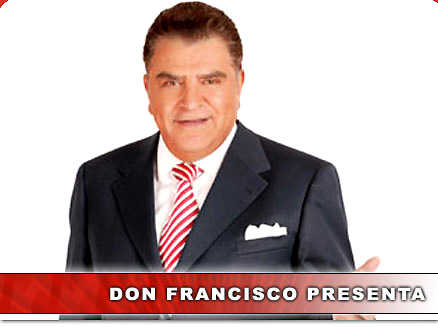
MIAMI - -- Halfway through Univision's top-rated variety show, "Sabado Gigante," host Don Francisco yells out: "Vamos a cantarle a State Farm! Musica, maestro!" -- "Let's sing to State Farm! "The audience swings into a snappy rendition of a song that praises State Farm Insurance -- part of the company's marketing strategy that is pumping more dollars into Hispanic marketing than ever before.

An increasing number of advertisers, especially consumer-product companies and financial-services firms, are reaching out to U.S. Hispanics and putting a larger share of their ad budgets into Spanish-language media and community-event sponsorships.

Earlier this month, video-game publisher Sega announced its biggest Hispanic marketing campaign with the launch of its latest Wii title, Daisy Fuentes' Pilates. Kellogg is adding "a touch of honey" to its Corn Flakes cereal to court Hispanic consumers who prefer honey as a natural sweetener. Fifth Third Bank, based in Cincinnati, is expanding its reach to Hispanics in seven markets -- including four in Florida: Orlando, Tampa, Naples and Ft. Myers -- with radio, print and online ads. The bank is also sponsoring local workshops to help consumers with their finances during the recession.

More than $5 billion was aimed at the Hispanic market in 2008, according to TNS Media Intelligence, an advertising market research firm.The amount was down slightly (0.08 percent) from the 2007 figure -- far less than the 4 percent drop in overall marketing spending, from $126.7 billion in 2007 to $121.8 billion in 2008.

As for State Farm, the Bloomington, Ill., company is spending more money to reach U.S. Hispanics this year than it did in 2008, says Mark Gibson, assistant vice president for advertising for State Farm. State Farm, regularly among the top 10 marketers to Latinos, spent nearly $58 million in advertising in Spanish-language TV, magazines and newspapers in 2008, doubling what it had spent in the prior year, according to TNS Media Intelligence. Though the insurer has marketed to Hispanics for the past decade, it accelerated its efforts three years ago when it began to sponsor "Sabado Gigante." Last year, it added the Fiesta del Jonron (a traveling home-run derby and Hispanic baseball hall of fame) and added the Latin Billboard sponsorship. State Farm agents sponsor bike-safety fairs and local baseball and soccer teams. This year's increased dollars will go toward traditional TV, print, online and radio advertising as well as event and sponsorship marketing."Consumers are savvy today. They understand when they are being advertised to," says Gibson." But you can take a relationship deeper when you can connect with consumers in ways they don't necessarily expect."

Copyright © 2009, Chicago Tribune

Mexican Consulate recognizes Marketing Excellence Inc for an outstanding professional development seminar


Below is the release by the Mexican Consulate after Emilio and Claudia of Marketing Excellence Inc facilitated a professional development seminar on customer service and retention marketing. Lydia Antonio of the consulate states "We immediately implemented some of the recommendations provided by Marketing Excellence and we are seeing vast improvements."


PERSONAL DEL CONSULADO GENERAL EN SAN DIEGO ATENDIÓ EL CURSO “CÓMO MEJORAR EL SERVICIO AL USUARIO”

17 Jul 2009

El sábado 11 de julio se impartió al personal de este Consulado General el curso “Cómo Mejorar el Servicio al Usuario” con la finalidad de mejorar la atención que se proporciona al público que diariamente asiste a las instalaciones de esta representación.
Este taller fue impartido de manera gratuita por los señores Emilio y Claudia Vargas, Presidente y Vice Presidenta de la empresa de relaciones públicas Marketing Excellence Inc., en colaboración con SCORE San Diego, organización no lucrativa que brinda apoyo y asistencia a pequeños empresarios a nivel nacional.

Cabe mencionar que este curso, además de brindar herramientas para mejorar el servicio que proporciona el personal de esta representación, ofreció la oportunidad para reflexionar sobre cómo mejorar los procedimientos de expedición de documentos y los servicios que se ofrecen al público en general”

CA Hispanic Chambers of Commerce (CHCC) 30th Annual State Convention


The California Hispanic Chambers of Commerce (CHCC), will host its 30th Annual State Convention on August 19-22, 2009. This year’s convention will take place at the beautiful and historic U.S. Grant Hotel.


US Grant Hotel 800-237-5029
326 Broadway San Diego, CA 92101USA Map and Directions

Come meet Emilio or Claudia during the Convention or stop by our booth Friday August 21 from 2PM to 7PM during the Supplier Diversity portion of the conference.

The CHCC serves as the leading Hispanic statewide business and professional organization promoting the interests of more than 720,000 Hispanic businesses and over 65 local Hispanic chambers in California. The goal of the CHCC's Annual Convention is to elevate discussion and participation among Hispanic business owners, corporate business leaders, community leaders, and government officials to address issues of relevance to the Hispanic business community.

The CHCC State Convention is the premier minority/ethnic business convention in California, offering participants the opportunity to learn the latest trends in business development, network with outstanding business professionals, and gain insights into growing and maintaining a successful business. Throughout the convention, participants have the opportunity to celebrate the educational, political, and economic success of the Hispanic community.

Convention participants will be exposed to some of the most dynamic, enterprising and informative speakers discussing current issues pertinent to the economic growth and development of California business and our communities. Past convention speakers include: Arnold Schwarzenegger, Governor of California; California Attorney General Jerry Brown; Former Governors Gray Davis and Pete Wilson; Former SBA Administrator Hector Barreto; Oscar, Grammy and Tony Award winning Actress Rita Moreno; Linda Alvarado, owner of the Colorado Rockies; and many more.

This year, the CHCC convention will feature business procurement/matchmaking sessions designed to bring business owners together with corporate and state procurement officers. The CHCC convention has featured the matchmaking session at previous conventions and has proven to be an extremely effective and successful tool for expanding business opportunities in the Hispanic and minority business community.

Also being featured is the CHCC’s Access to Business Capital (ABC) program. Through this innovative program, the CHCC helps companies receive private investment or equity financing beyond the traditional financial institutions. Additionally, the ABC program provides the business owner with practical tools and training.
Conference participants are invited to join in and engage in the various convention activities, including:

  • Discussion of the vital legislative and economic issues affecting our business community with key elected officials and policy makers.
  • Informative business development and chamber development sessions.
  • Networking opportunities.
  • One-on-One Procurement Matchmaking meetings.

    Register Now
    Tell a friend
    Add to Calendar

    Contact Information
    Telephone: 800.299.6033 Email: convention@cahcc.com
    Send Email

Hispanic Marketing Day 2009 (May 7, 2009)

“The San Diego Hispanic Market: An Economy Within An Economy”The San Diego Ad Club is proud to present the 16th Annual Hispanic Marketing Day designed to bring you the latest information on this vibrant economy within our economy. All attendees will receive the newly updated Hispanic Marketing Resource Guide.

11:30am – Networking and Check-in
12noon – Guests move to ballroom
12:30pm – 1:15pm – Presentation Panel discussion moderated by Robert Santiago, Director of Client Services, La Agencia de Orci & Asociados

Panelists:
Jeff Overton, Executive Vice President, Business Operations San Diego Padres,
Joe Benites, President,The Benites Group, Inc.
Laura Hernandez, Senior Hispanic Media Relations and Marketing Specialist, Sharp Healthcare 1:15pm – 1:40pm – Lifetime Achievement Award1:40pm –
1:45pm – Wrap Up, Adjourn

Location:
The Prado at Balboa Park 1549 El Prado San Diego, CA

Some important differences in Hispanic Marketing

Think family unity! The Hispanic family is very tight knit.

Don't say anything that may offend the family especially the females-- mothers, daughters, sisters, grandmothers, etc. A beer company launched its product with the tagline, 'Finally, a cold Latina.' Not good! What were they trying to say about female latinas.


A snack food manufacturer launched a TV Ad where the father is not willing to share his chips with his daughter and other family members. That would never happen. The sharing of food is a fundamental part of how Hispanics show much they care for other family members and friends.

Every nation is different. Think nationalistically. If you highlight one country you could alienate another. The Mexican community is huge in the US. However there are several other with a lot of purchasing power. The Cuban and Puerto Rican communities are large and growing rapidly. You have to carefully balance nationalistic pride within a message or ad so yo do not push some other nation's Hispanics away.